Do Not Delete
Wearable health technology can tell us a lot these days. How long we slept. How much deep sleep we got. Our resting heart rate. Heart rate variability. How well we’ve recovered. How many steps we’ve taken. And so much more.
And I can absolutely see the appeal. I like information. I use labs when they’re helpful, and I want to understand what’s happening in the body rather than guess. So I’m certainly not going to tell you that having more information about your body is a bad thing.
But there’s another kind of information that’s even more important than what a device can give us: what our body is actually telling us.
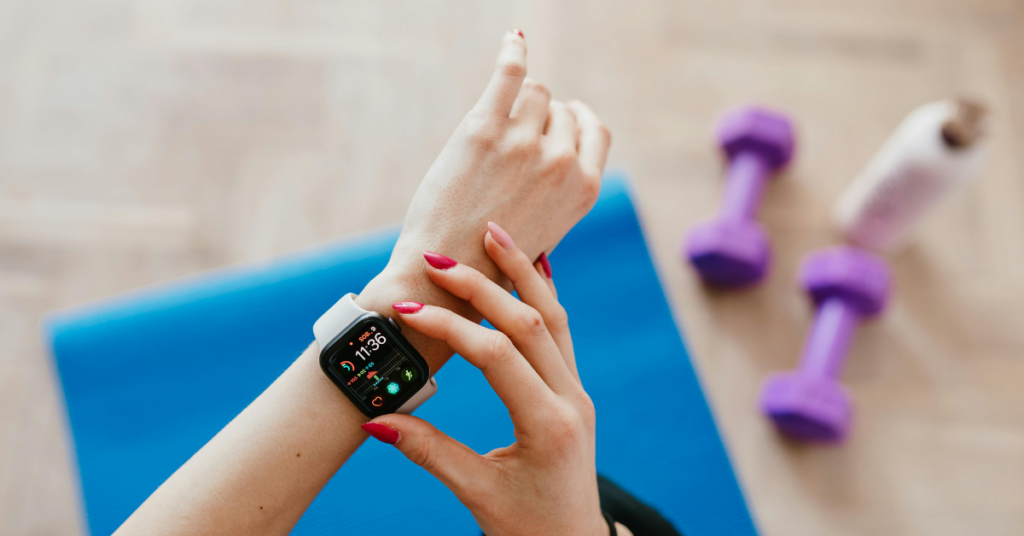
Your Body Is Giving You Data Too
Let’s say you wake up after what felt like a great night’s sleep. You slept soundly, you feel rested, your energy is good, and you’re ready for the day. Then you check your wearable and see a poor sleep score. Suddenly you’re thinking, Oh. I guess I didn’t sleep very well.
Nothing about how you physically feel has changed. The only thing that changed is that a device gave you a number, and now that number has started to influence how you interpret your own experience. That’s where a useful tool can start working against us. It takes us out of the relationship with our own body and puts more weight into an external voice.
Your wearable has data, but your body is giving you information too. How you feel when you wake up is information too. Your energy throughout the day, mood, digestion, hunger, strength, focus, recovery, and how your body responds to food, exercise, stress, and sleep are all information. A wearable can measure certain things about your body, but it can’t experience what it’s like to live in it.
If the device says you slept poorly but you feel fantastic, I don’t want the score convincing you that you should feel tired. And the opposite matters just as much. If your wearable says you’re beautifully recovered and ready for a hard workout, but you’re exhausted, achy, or something simply feels off, I don’t want the score convincing you to ignore that either.
Use the data to learn more about your body. Don’t use it to tell your body how it feels.
Why I Choose Not to Wear One
In full transparency, I don’t use a wearable myself. I only have so much attention (and money) to give to my health, and I’ve made a conscious decision about where I want to put it. I’ve chosen to focus on getting better at listening to my body and responding to the signals it’s giving me.
That means noticing how I feel when I wake up, how my energy changes throughout the day, how I feel after I eat, how my digestion is functioning, whether my body feels recovered from exercise, whether I’m hungry or satisfied, and whether something feels different than it normally does. None of those things requires a device to notice.
But simply “listening to your body” isn’t always enough. It becomes much more useful when we also understand the physiology behind what we’re experiencing and know how to respond to the messages our body is sending. If my energy crashes after a meal, understanding blood sugar regulation gives me somewhere to start looking for an explanation. If my digestion changes, knowing how food, hydration, movement, stress, medications, and other factors can influence digestion helps me think through what may be happening.
That’s one of the reasons I’m so passionate about teaching women how their bodies work and helping them put that knowledge into practice in my Gut Harmony program [EXTERNAL LINK]. The more we understand how everything is connected, the better equipped we are to interpret the signals our bodies are already giving us and make adjustments based on what we notice.
That’s the skill I choose to put my attention into developing rather than adding another source of data to monitor.
Eventually, the Data Has to Become a Decision
There’s another reason I’ve chosen not to use a wearable. Let’s say it tells me I’m not recovering well. Okay, now what?
The score itself doesn’t create recovery. Eventually, I still have to figure out what my body may need. Do I need more sleep? More food? A rest day? Less intense exercise? More hydration? More downtime? Has stress been unusually high? Have I been giving my body what it needs to recover?
The same is true if a wearable consistently tells me my sleep isn’t as good as I thought it was. That could be useful information, but eventually I’m going to have to look at the things that influence my sleep and decide whether something needs to change.
You see what I’m saying? Regardless of whether the information comes from listening to our body or from a wearable, if we want to address an imbalance, we eventually have to back things up to the same place: the foundations. Nutrition, movement, sleep, recovery, stress resilience, hydration, and our other everyday choices are what ultimately influence how our bodies function.
The device isn’t the intervention. It may help identify something worth paying attention to, but we’re still the ones who have to respond to that information.
What If Your Wearable and Your Body Disagree?
None of this means our experience is always right and the device is always wrong. Sometimes wearable health data may reveal a pattern we haven’t noticed, and that’s part of what can make it useful. But when your device and your body are telling you two different things, I wouldn’t automatically assume the device knows better.
If you feel rested but your sleep score was terrible one night, maybe you simply take note of it and move on. If the discrepancy keeps happening, perhaps there’s something worth getting curious about. Is there a pattern? Is the data showing you something you haven’t noticed? Is there context the device can’t account for?
The same goes for the opposite. If your numbers look fantastic but you consistently don’t feel well, how you feel deserves more attention than the score. A good recovery or sleep score shouldn’t become evidence that everything must be fine when your body is telling you otherwise.
We don’t necessarily need to choose which source of information is “right.” The mismatch itself can be another clue. That’s very different from allowing an algorithm to become the authority on how we’re doing.
Let the Wearable Be a Tool, Not the Boss
I’m not suggesting you throw your Oura Ring or Apple Watch in a drawer. If you enjoy your wearable and the information helps you make useful decisions, keep using it. But I’d encourage you to make sure you’re still honing the skill of listening to your body without checking a score first.
Try checking in with yourself before you look at the data in the morning.
- How did I sleep?
- Do I feel rested?
- What’s my energy like?
- How does my body feel?
- Do I feel recovered?
- Is anything noticeably different today?
Decide how you feel before you find out what your wearable has to say about it.
Then look at the data. Maybe it confirms what you already noticed. Maybe it gives you additional information worth considering. Maybe the two don’t match at all. Whatever you find, let the information add to your understanding of your body rather than override your experience of it.
Because the goal isn’t to get better at listening to a device. It’s to get better at understanding our bodies. And whether you use a wearable or not, that’s a skill worth developing.