Do Not Delete
Are high protein foods healthy? A protein claim isn’t a health claim. Learn what the label really means and what to check before it goes in your cart.
You’re in the grocery aisle, and a box of crackers is practically shouting at you: 20g PROTEIN. Into the cart it goes, and you feel like you made a smart choice.
So, are high-protein foods healthy? Some are, and some aren’t. Under FDA rules, a “high protein” label only means one serving has at least 10 grams of protein. It says nothing about the rest of the food, and we’ve been here before, with “low fat.”
For years, we were told fat was the problem.
So food companies gave us fat-free cookies, low-fat salad dressing, fat-free yogurt, reduced-fat crackers and just about anything else they could slap a “LOW FAT” label on. And somewhere along the way, many of us started equating those two little words with healthy.
Never mind what else was in the food. If it was low in fat, it must be a better choice, right??
I remember those days well. I bought SnackWell’s cookies because they were fat free, ate fat-free yogurt and poured fat-free dressing on my salads, all while avoiding fat and thinking I was eating healthy.
Thankfully, we’ve learned a lot since then. We now know that fat isn’t something we should universally avoid and that healthy fats are an important part of a nutritious diet. And we definitely know that low fat does not equal healthy.
But I think we’re starting to make the same mistake with another nutrient.
This time, it’s protein.
Protein Is Having a Moment
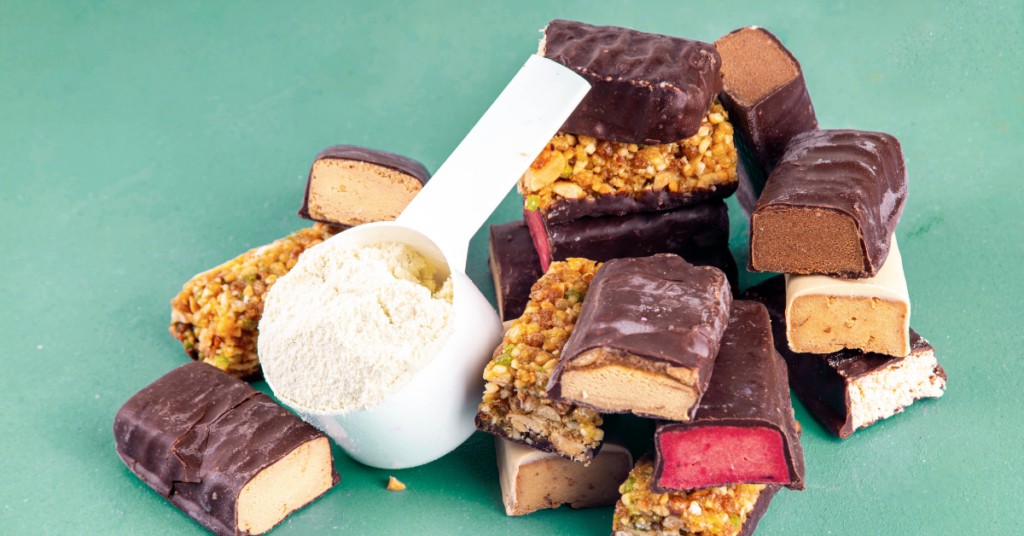
Protein is getting the spotlight fat once had, and the grocery store shows it. We have high-protein cereal, high-protein pancakes, protein chips, protein bars, protein cookies, protein drinks and foods that never used to advertise their protein content suddenly shouting the number of grams from the front of the package.
And to be clear, I’m thrilled that we’re talking more about protein.
Protein is essential. We need its amino acids to build and repair tissues, make enzymes and other important compounds, and maintain muscle. Getting enough becomes particularly important as we get older and preserving muscle becomes a bigger health priority.
A 2015 review in Current Opinion in Clinical Nutrition and Metabolic Care notes that the current standard protein recommendation may not be enough as we age.
Why Is Protein Suddenly in Everything?
Protein shows up in everything now because it sells.
So yes, I want you thinking about protein.
But I don’t want you thinking only about protein.
Because somewhere between “Protein is important” and “Make sure you’re getting enough protein,” the food industry heard an opportunity: Put protein in it, put the number on the front, and suddenly the food looks healthier.
Sound familiar?
Are High-Protein Foods Healthy Just Because of the Label?
No. A high-protein label tells you how much protein a food has, not whether the food is healthy. This is the same kind of health halo (when one appealing feature makes a whole food seem healthier) we created around “low fat.”
We took one characteristic of a food and allowed it to become shorthand for the quality of the entire food. Now I see women picking up a packaged product, seeing “20g PROTEIN” across the front and immediately giving it a nutritional gold star.
But 20 grams of protein tells you exactly that: the food contains 20 grams of protein.
And the bar for that label may be lower than you think. Under FDA labeling rules, a food can be called “high” in a nutrient when one serving provides 20% or more of the Daily Value. For protein, that’s 10 grams. Nothing in that rule looks at the rest of the food.
What the Protein Number Can’t Tell You
The protein number doesn’t tell you what the rest of the food is made from. It doesn’t tell you how heavily processed it is, how much added sugar it contains, whether it provides much fiber or how nutrient-dense it is. It doesn’t tell you whether you’re getting vitamins, minerals, phytonutrients (protective compounds found in plants) and healthy fats along with that protein.
And it certainly doesn’t tell you whether it’s a food that makes sense for your body.
That’s why I don’t want us judging an entire food by whichever nutrient happens to be getting the spotlight at the moment.
What Else Are You Getting?
The better question isn’t how much protein a food has. It’s what else comes with it.
One of the biggest changes I’ve made in how I think about food is that I don’t just ask what I need to avoid or how many grams of a particular macro (protein, carbs or fat) I’m getting. I’m much more interested in how much nutrition I can bring into my meals.
- What nutrients am I getting?
- How much variety is on my plate?
- How many different plants am I eating?
- Where are my fiber and healthy fats coming from?
- Am I eating foods that actually nourish my body?
Protein is part of that picture, but it isn’t the whole picture.
Real-Food Protein vs. Added Protein
Think about the difference between choosing a food because it naturally provides protein along with other nutrients and choosing a highly processed food primarily because protein has been added to it. Both may technically help you reach a protein goal, but that doesn’t make them nutritionally equivalent.
The Tufts University Health & Nutrition Letter points to a steady intake of protein from healthy sources, along with regular movement, as a way to help protect muscle as we age.
That doesn’t mean a protein bar is bad. It doesn’t mean you should never drink a protein shake or buy a packaged high-protein food. Convenience matters, real life matters, and sometimes those foods are genuinely useful.
The point is simply that the protein claim shouldn’t end the evaluation.
Turn the Package Around
The simplest way to judge a high-protein food? The next time HIGH PROTEIN catches your attention on the front of a package, turn it around.
Don’t just look at the protein grams. Look at the ingredient list. Look at the rest of the nutrition information. Consider what the food actually is rather than what the marketing on the front wants you to notice first.
What to Check on the Back of the Package
- Ingredients: Where is the protein coming from? Do you recognize most of what’s listed?
- Added sugars: How much came along with that protein?
- Fiber: Is there any?
- The rest of the food: Is it mostly real food, or mostly processing?
Then ask yourself: What else am I getting with that protein?
Maybe you’re getting protein along with fiber, healthy fats and a variety of nutrients.
Maybe you’re getting protein along with a long list of highly refined ingredients, added sweeteners, and very little nutritional value.
Neither answer requires you to declare the food “good” or “bad.” It simply gives you more information with which to make your choice.
And that’s what I want for us.
Don’t Let One Nutrient Define “Healthy”
Protein won’t be the last nutrient to have a marketing moment.
We’ve already watched it happen with fat, carbs, calories and fiber. A legitimate piece of nutrition science gets distilled into one simple message, that message spreads everywhere, and before long we’re walking through the grocery store evaluating food through that one lens.
Nutrition just doesn’t work that way.
Our bodies need protein, fat, fiber, and carbs. They need vitamins, minerals, phytonutrients and enough total energy to function. They benefit from variety and from foods that bring more to the table than a single impressive number on a label.
So yes, protein matters. Make sure you’re getting enough. Choose foods that help you maintain muscle and support your body as you age.
Just don’t let “high protein” become the new “low fat.”
Because a food can check the box for the nutrient we’re all talking about right now and still not support your overall health goals.
If you’re ready to stop judging food by one number and start understanding what it actually does inside your body, that’s what we work on together in Gut Harmony. Join the Gut Harmony waitlist.
FAQs: High-Protein Foods
Q: Are protein bars healthy?
A: Some can be a useful, convenient option. It depends on what else is in the bar. Check the ingredients, added sugars and fiber, not just the protein grams.
Q: What does “high protein” mean on a food label?
A: Under FDA rules, a food can say “high protein” if one serving provides 20% of the Daily Value, which is 10 grams. The claim says nothing about the rest of the food.
Q: What are good whole-food sources of protein?
A: Eggs, fish, poultry, meat, beans, lentils, nuts and seeds. They bring other nutrients along with the protein.