Do Not Delete
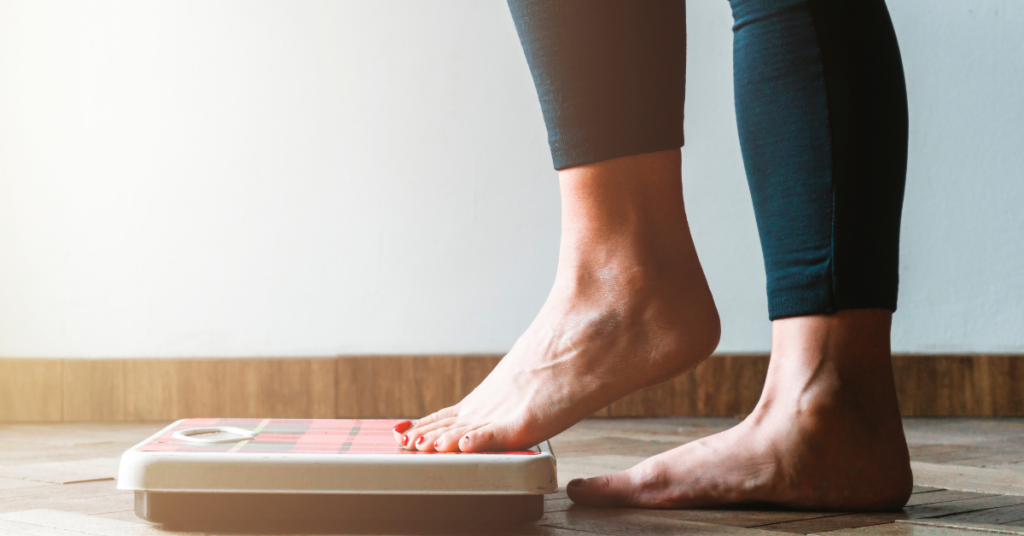
For years, I had a pretty simple way of deciding whether I was getting healthier: if the number on the scale was going down, I was doing something right.
I don’t think I was unusual in that. We’re taught to pay an incredible amount of attention to weight. We step on the scale, watch the number move up or down, and let that one measurement tell us whether the way we’re eating, exercising, and living is “working.”
I used to do exactly that. What I understand now is that the scale was answering one very specific question: What do I weigh? I was using its answer to make a much bigger assumption: How healthy am I? And those aren’t the same question.
I Stopped Making Weight the Goal
One of the biggest shifts in how I think about my own health happened when I stopped trying to lose weight.
I started looking at weight the same way I would look at any other symptom or indicator. If someone is struggling with fatigue, brain fog, bloating, poor sleep, high cholesterol, or cravings, I don’t think the goal should simply be to make that one thing disappear. I want to understand what might be contributing to it and what the body may need in order to function better.
So why was I treating weight differently?
Instead of continuing to ask, “How can I lose weight?”, I started asking a much bigger question: “What does my body need in order to function better?”
That changed what I focused on. I stopped making decisions based on whether they might make the scale move and started paying more attention to whether I was actually nourishing my body. I learned how to balance my blood sugar and became much more intentional about supporting digestion, reducing inflammation, getting enough sleep and recovery, managing stress, and building and maintaining muscle.
More importantly, I stopped looking for another short-term diet or protocol that promised weight loss. If health was really the goal, I needed to build habits I could actually live with. I wasn’t interested in eating a certain way for 30 days or following a plan until I reached a number on the scale, only to eventually go back to the way I’d been living before.
I wanted to learn how to live in a way that supported my health for the rest of my life.
Losing Weight and Getting Healthier Aren’t Necessarily the Same Thing
That’s also when I began to understand why losing weight, by itself, doesn’t necessarily tell us we’re getting healthier.
A restrictive diet can make the scale drop while leaving us undernourished. Weight loss can include muscle, not just body fat. And particularly as we move through midlife, maintaining muscle and supporting bone health become increasingly important.
The scale also can’t tell us what’s happening with blood sugar regulation, cholesterol, inflammation, nutrient status, digestion, cardiovascular health, sleep, or energy. It doesn’t tell us whether we’re getting stronger or weaker, whether we’re eating enough nutrients to support our bodies, or whether our metabolism is functioning better.
And it certainly can’t tell us whether the habits producing that number are actually teaching us how to eat, move, and live in a way we can sustain for years to come.
That’s why I’ve come to think of weight as information, not a health grade. It may be one useful piece of the picture, just like cholesterol, blood sugar, blood pressure, energy, digestion, or any number of other indicators. But none of those individual pieces gets to tell us the whole story.
When I Made Health the Goal, More Than My Weight Changed
Here’s the part of my own experience that really changed how I think about all of this…
When I stopped trying to lose weight and started focusing on helping my body function better, the weight came off anyway.
But it wasn’t the only thing that changed.
My cholesterol decreased. My thyroid function improved. The majority of my perimenopause symptoms disappeared. My IBS cleared up. Other things I hadn’t even been specifically working on improved too. My health was changing in ways that no bathroom scale could have shown me.
And I wasn’t chasing each of those things individually. I didn’t have one lifestyle for weight, another for cholesterol, another for my thyroid, and another for perimenopause.
I was working on the foundation underneath all of them.
Our bodies aren’t a collection of unrelated compartments. The food we eat, our blood sugar regulation, digestion, inflammation, sleep, stress, movement, muscle, and nutrient status can influence multiple systems and processes at the same time. When we improve those foundational areas, we’re not targeting one symptom. We’re creating better conditions for the entire body to function as well as it can.
This is the benefit of thinking functionally about our bodies. Instead of chasing every symptom with its own solution, we focus on creating the foundational conditions our bodies need to function well, so the benefits can extend throughout the body.
I Still Care About Weight. It Just Doesn’t Get to Be the Scoreboard.
I don’t think the answer is to pretend weight doesn’t matter. Body composition can give us useful information, and losing excess body fat may absolutely be an appropriate health goal for some people.
What I’ve changed is the amount of authority I give that number.
Today, I’m much more interested in the bigger picture. Am I adequately nourishing my body? Am I maintaining and building muscle? How is my blood sugar regulation? What do my labs show? How is my digestion? Am I sleeping and recovering well? How is my energy? What is happening with inflammation? Do I feel strong and capable in my body?
We don’t need to turn all of those things into ten new scoreboards. That’s not the point. The point is to stop allowing one number to convince us that we’re getting healthier simply because it’s moving in the direction we wanted.
So if weight loss is something you’re working toward, I’d encourage you to make the question bigger: What else is happening to my health?
Are the things you’re doing to lose weight also nourishing your body, protecting muscle and bone, supporting your metabolism, and helping you function well? And are they things you can imagine doing for the rest of your life?
In other words, are you building a lifestyle, or following a short-term plan?
Because these days, I’m not interested in simply making my body weigh less.
I’m interested in helping it work better.